- Leads slipping through the cracks are often the clearest sign that the process needs automating
- Automation does not fix a messy process: it magnifies it if the foundations are not in place
- Start by automating the most predictable, repetitive tasks first
- Measure the impact continuously so the automation is adjusted in line with what actually works
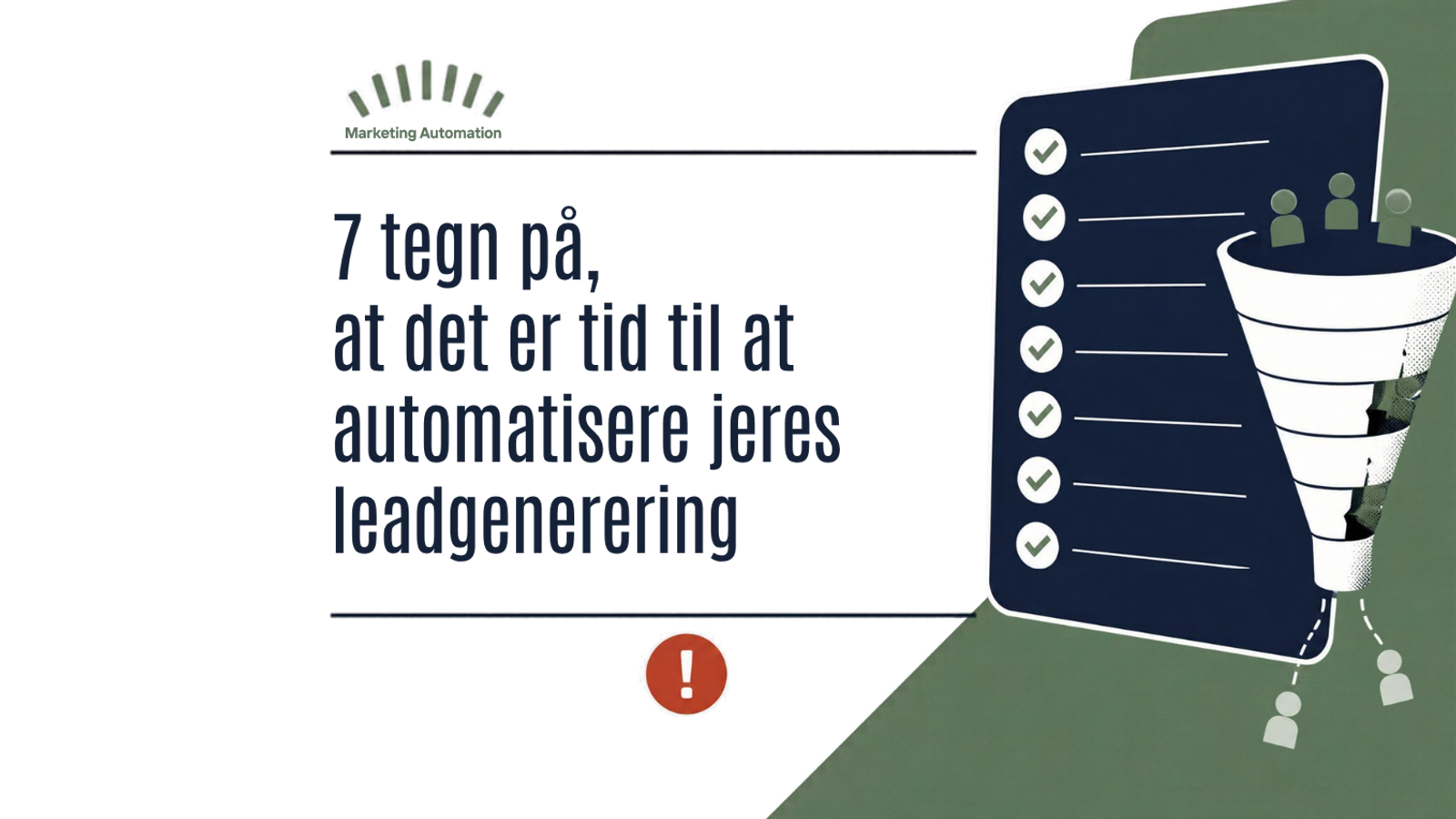
Automation is not a goal in itself, but there are clear day-to-day signals that your current process is limiting growth more than it is supporting it. Here are seven of the signs we most often see at companies before they get started with marketing automation.
The 7 signs
- 1. Leads slip through the cracks because follow-up is manual and irregular
- 2. You cannot see which leads are genuinely warm right now without asking around
- 3. Marketing and sales each work from their own list and their own idea of what a "good lead" is
- 4. Contact data is rarely updated, and you keep working from outdated information
- 5. Content is sent to everyone in the same way, regardless of where they are in their decision process
- 6. Salespeople spend more time on admin than on actual conversations with customers
- 7. You have no clear measurement of what actually drives meetings and closed deals
If several of these points sound familiar, it is rarely because the team is not working hard enough. It is because the process lacks structure, which is exactly the kind of problem automation is well suited to solve.
Automation magnifies, it does not fix
An important point that many overlook: automation does not fix a messy process on its own. If you put automated workflows on top of an unclear ICP or undefined lead scoring, you simply magnify the problem, only faster. The foundations need to be in place first: a clear ideal customer profile, a shared definition of a qualified lead and a CRM that everyone actually uses.
How to start the right way
- Map your current customer journey from first contact to closed deal
- Identify the most repetitive, predictable tasks in the process
- Automate one step at a time, for example follow-up emails or lead scoring, rather than everything at once
- Measure the impact continuously, and adjust workflows in line with what the data really shows
Automation built on solid foundations frees up time for the work that needs a human touch, and makes sure no leads slip through the cracks just because nobody had time to follow up.
Read about Marketing Automation