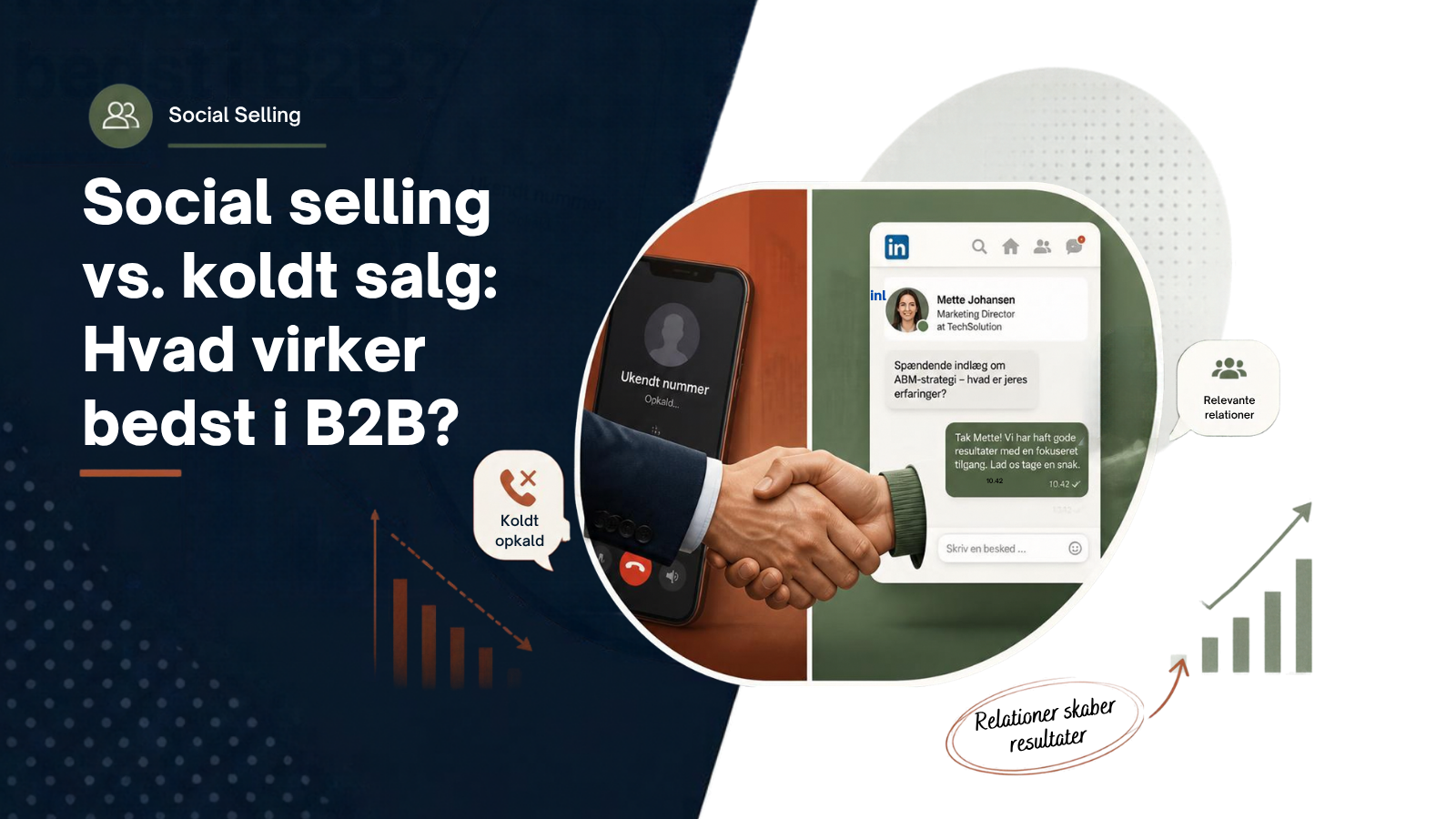
- Social selling builds trust before asking for anything. Cold selling goes straight for the meeting
- The B2B buyer journey has become longer and more research-heavy, which favours relationships over pitches
- The best results often come when social selling warms up and structured follow-up closes
- It is not about choosing one method, but about using the right one at the right stage
The debate about social selling versus cold selling is often made needlessly black and white. In practice, the two approaches are not opposites. They solve different parts of the same task: getting a qualified conversation going with a potential customer.
The difference in practice
Cold selling goes straight for the meeting, typically by phone or email, with no prior relationship. It can be effective, but it requires precise timing, a sharp ideal customer profile and a salesperson who can handle nine rejections to land the tenth deal.
Social selling, on the other hand, builds trust before asking for anything at all. It is about being visibly present, sharing relevant content, leaving thoughtful comments and building a relationship, so that when the meeting is finally requested, it feels like a natural next step rather than a cold call.
Why the buyer journey favours relationships
Today’s B2B buyers do significantly more research before they ever speak to a salesperson. They check LinkedIn profiles, read reviews and form an impression of who you are long before the first meeting. This means the relationship and credibility you have built up in advance, typically through social selling, often decide whether your cold outreach is taken seriously at all.
The combination that actually works
- Use social selling to warm up your audience and build visibility over time
- Use a sharp ideal customer profile to decide who is worth your time in the first place
- Let structured follow-up (phone, email or a meeting) close once the relationship is there
- Keep measuring and adjusting which combination gives you the most qualified meetings
Rather than picking a side in the debate, the more useful exercise is to map where in the buyer journey your audience typically is, and let that decide whether the next step should be a post, a comment or a phone call.
Read about Social Selling on LinkedIn